
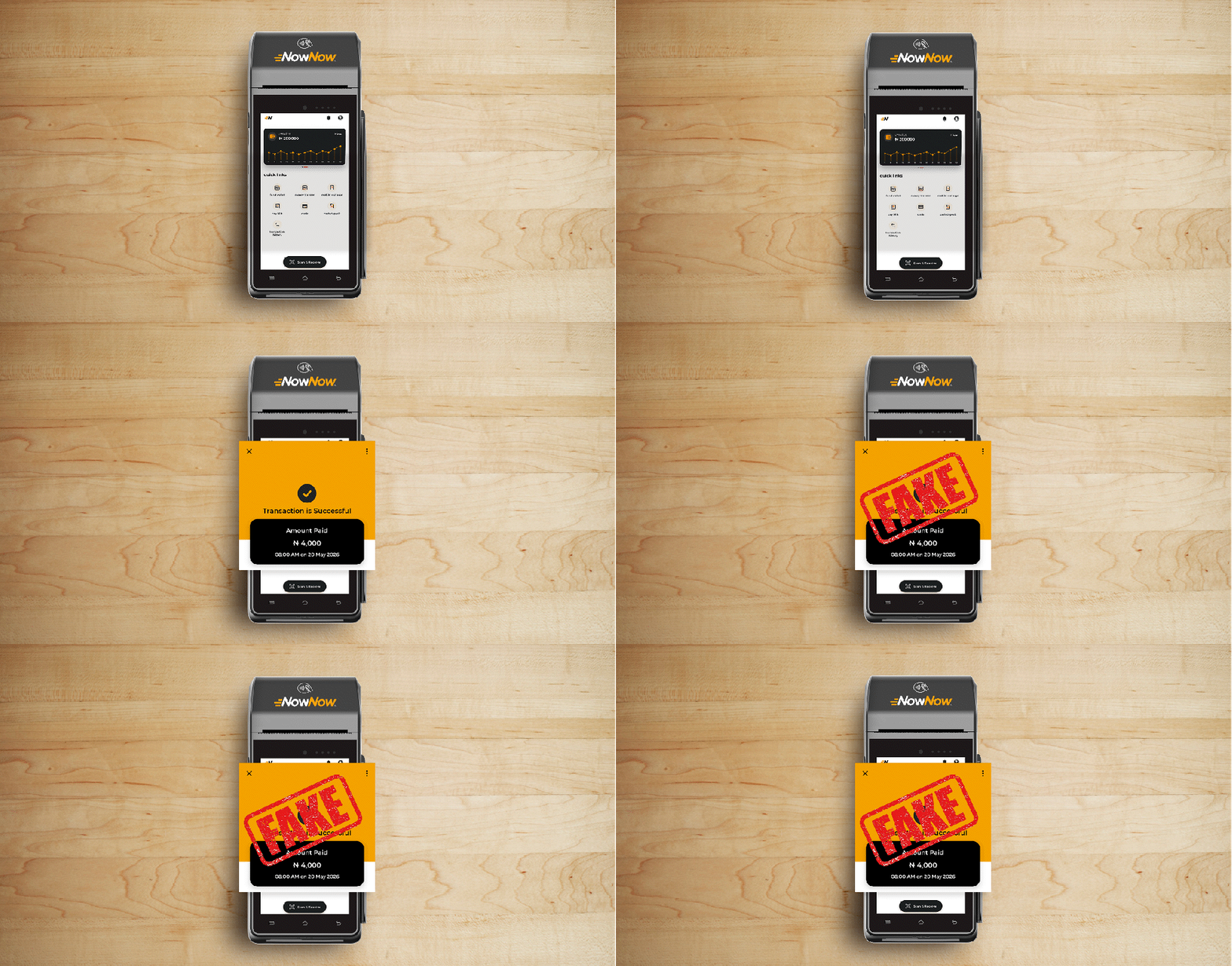
Fake alert are fairly common.
A customer sends money, shows you the alert, and says, “Check it, I don send am.” Everything looks correct. And because you don’t want to delay, you’re about to release cash or goods.
Stop there, it may be fake alert.
This is exactly how many people lose money in Lagos every day. So what should you do in that moment?
1. Do NOT release cash or goods
This is your first and most important move. Even if the alert looks real and the customer is talking confidently, just hold on. Say calmly:
“I’ll wait for it to reflect.”
No shouting. No accusations.
Read: How to Identify Fake Transfer Alert (bank transfer) on Your Phone or POS
2. Check your account Instead of the Fake Alert
Open your bank app or POS wallet and confirm. If money enters, continue normally. If money does NOT enter, treat it as suspicious. Don’t rely on their phone. Only trust yours.
3. If it hasn’t reflected, stand your ground
At this point, do not argue. Just repeat calmly: “It has not reflected yet. Let’s it it a few minutes. Most scammers will leave once they see you are not easy to pressure.
4. If the person insists or starts acting funny
This is where you need to be smart. Even if you feel it is a fake transfer alert:
Do not:
-
Grab them
-
Lock your shop
-
Fight or argue aggressively
You don’t know who they are or if they are with others nearby.
5. Raise attention only if you feel safe
If the situation feels suspicious or tense
-
Call someone nearby (another shop owner, colleague)
-
Speak louder so others can hear:
“This payment has not entered.” Once they see that the attention is on them, scammers usually back off quickly.
6. Let them go if needed
This part is important. If:
-
They refuse to wait
-
They start getting aggressive
Let them go. Your safety is more important than catching them. You’ve already protected your money by not releasing anything.
7. Learn and stay ready next time
After the situation:
-
Stay alert for similar patterns
-
Inform nearby business owners
-
Stick to your rule every time