
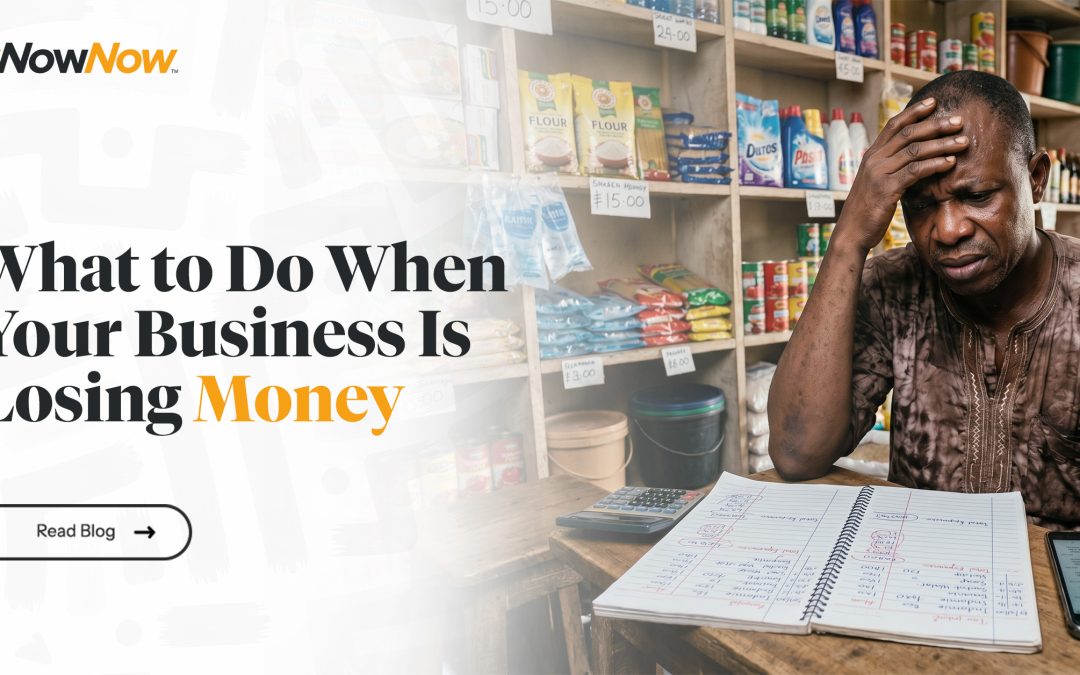
There’s something many business owners don’t talk about enough. What to do, if your business is losing money?
You know that quiet point where you sit down, look at your numbers, and realize something isn’t working. You’re putting in effort. You’re making sales. People even know your business exists. But at the end of the day, the money just isn’t adding up.
And then the question comes:
“Should I keep going… or is this where I stop?”
Before you make that decision, let’s slow things down and look at what’s really happening and more importantly, what to do when your business is losing money.
8 Ways To Stop Your Business From Losing Money
Here are 8 ways to save your struggling business in 2026 before calling it quits.
1. Understand What’s Actually Happening
When your business is losing money, it doesn’t automatically mean your business idea is bad. Most times, it means something in your business model needs to be adjusted.
At it is usually one of these two;
– You’re spending more than you’re earning,
– What you’re earning isn’t enough to sustain how you operate
Simple but not always obvious. Because in reality, many business owners don’t know exactly where the problem is coming from. That’s where you start.
2.Take a Closer Look at Your Numbers
This step is non-negotiable. Not guesses on what is working or not. Not rough ideas. You need real numbers. For example, you sell a product for ₦5,000, but after production, delivery, and packaging, you’re left with almost nothing. That’s not a sales problem. That’s a profit problem.
So you need to track:
- How much money is coming in (daily or weekly)
- How much is going out (every single expense)
When you do this properly, you may discover that:
- A “best-selling” product isn’t actually profitable
- Small daily expenses are quietly eating your profit
- You’re making sales, but your margins are too low
Work with this new information and carry out the next step.
3. Cut Costs
If your business is losing money, reducing expenses is one of the fastest ways to regain control. But don’t panic-cut. Be intentional and strategic about how you cut cost.
Look out for unnecessary expenses like tools, subscriptions, or services you barely use, excess inventory tying down your cash or daily operational waste (logistics, fuel, inefficiencies). Instead of buying in bulk and locking up your money, buy closer to when you actually need stock.
Read: How to Save a
4. Fix Your Pricing
You can be making steady sales and still be losing money simply because your pricing is off. Many business owners price based on:
- Fear of losing customers
- What competitors are charging
- What “feels affordable”
Instead of pricing based on Cost + Profit + Sustainability
When your pricing is too low:
- You’re always under pressure to sell more
- You struggle to grow
- You feel stuck, even when business is “busy”
Sometimes, a small increase paired with better value communication can change everything.
5. Focus on What Actually Makes You Money
Not everything in your business deserves equal attention. Some products or services Sell fast, bring in profit or are easy to deliver Others take too much effort, bring little or no profit or drain your energy
If your business is struggling, focus on what works, improve it and promote it more. Most importantly, be willing to adjust or let go of what doesn’t.
6. Increase Sales Without Starting From Zero
There one is very necessary. When revenue drops, most people usually think: “I need new customers.” But that’s not always the fastest solution.
Start with the people who already know you. Reach out to past customers, people who made inquiries in via Whatsapp, social media channels, email etc or even existing customers who can buy more. Don’t just reach out causally, do that strategically. For instance, instead of selling one item, package it as a bundle and increase the total value per sale. Same effort. Better returns.
7. Identify and Fix Hidden Money Leaks
Sometimes, the issue isn’t obvious, it’s hidden in everyday operations.
Look out for:
- Customers delaying or avoiding payments
- Poor inventory management
- Inefficient processes wasting time and money
These may seem small, but over time, they can significantly affect your business.
8. Stabilize Before You Scale
If things feel overwhelming, focus on keeping your business afloat first.
You can:
- Sell unused stock or equipment
- Pause non-essential spending
- Find short-term support to ease cash flow
This isn’t failure. Rather see it as giving your business breathing space while you fix the foundation.
Bottomline
Every business goes through tough phases. What matters is how you respond. If you’re currently figuring out what to do when your business is losing money, don’t rush to shut everything down. Before you quit, ask yourself if Is your business truly not working or is your current approach not working? In many cases, businesses don’t fail because the idea is bad but because the strategy needs to evolve.
What’s been more challenging for you lately, increasing sales or controlling expenses?